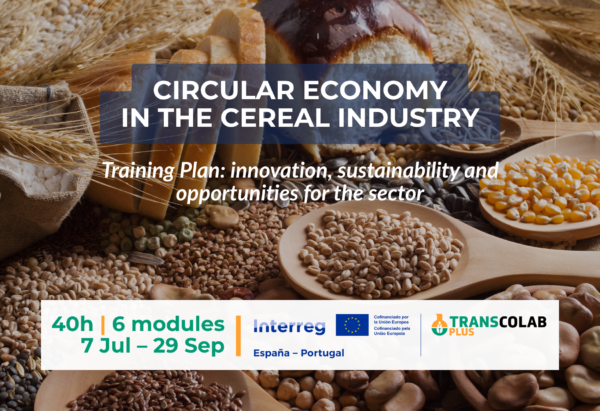
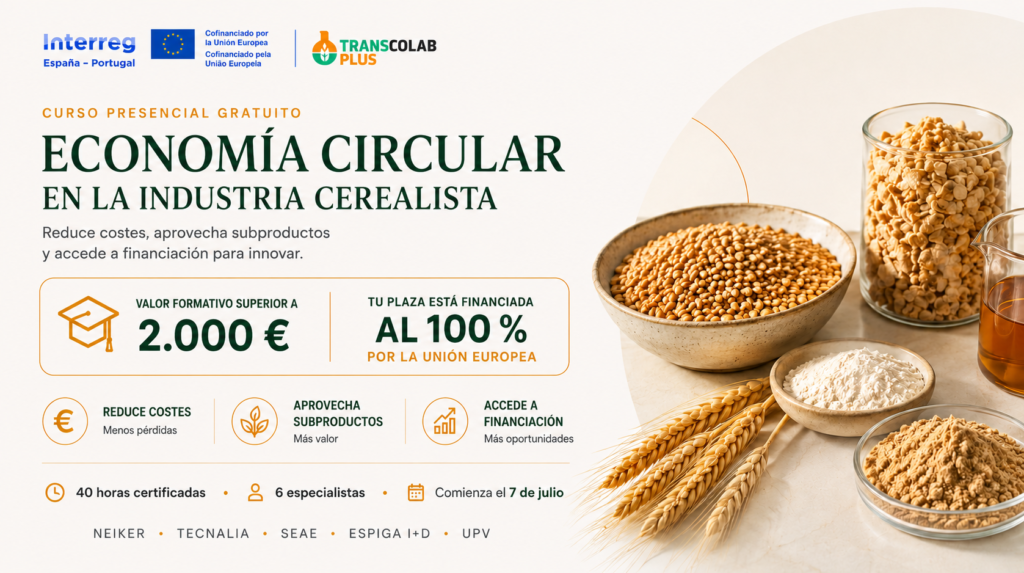
Circular economy has become one of the main strategies for improving the sustainability, competitiveness and resilience of the agri-food industry. With this goal in mind, the Training Plan on Circular Economy in the Cereal Industry has been created as a specialised training programme that combines technical knowledge, practical experiences and real case studies applied to the cereal sector.
Over the course of 40 certified hours, participants will gain a comprehensive overview of the challenges and opportunities involved in the transition towards more sustainable production models, addressing key issues such as reducing food waste, valorising by-products, technological innovation, access to funding for R&D&I projects and communication of the environmental and nutritional benefits of organic cereals.
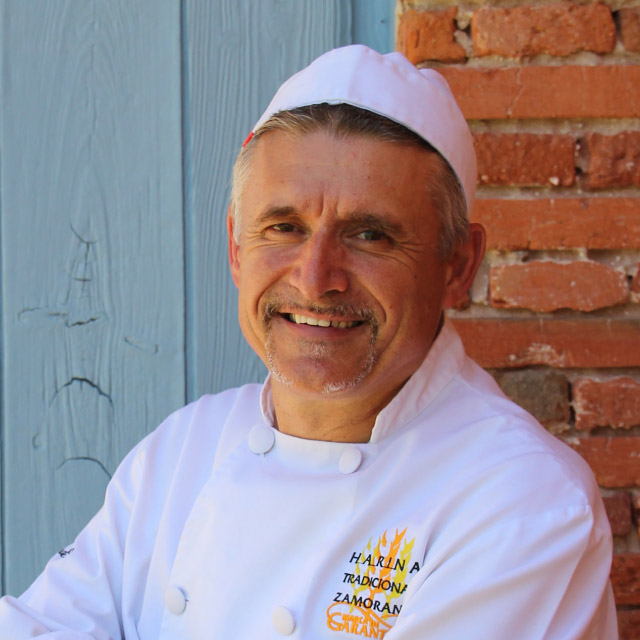
The training will be delivered by a highly regarded teaching team, made up of professionals and specialists from leading organisations such as SEAE, NEIKER, TECNALIA BRTA, ESPIGA I+D, PANDURU SLL and the Polytechnic University of Valencia. The programme will also include applied practical training led by Florindo Fierro, Master Baker.
METHODOLOGY
The programme combines theoretical and practical training to facilitate the immediate application of the knowledge acquired:
- 1,5 hours of specialised theoretical content in each session.
- 2,5 hours of applied practical training, led by Florindo Fierro, Master Baker, where participants will be able to learn first-hand about processes, techniques and experiences linked to the sustainable use of cereals.
In addition, attendees will have access to supplementary materials and training resources through SEAE’s Moodle platform.
TRAINING PROGRAMME
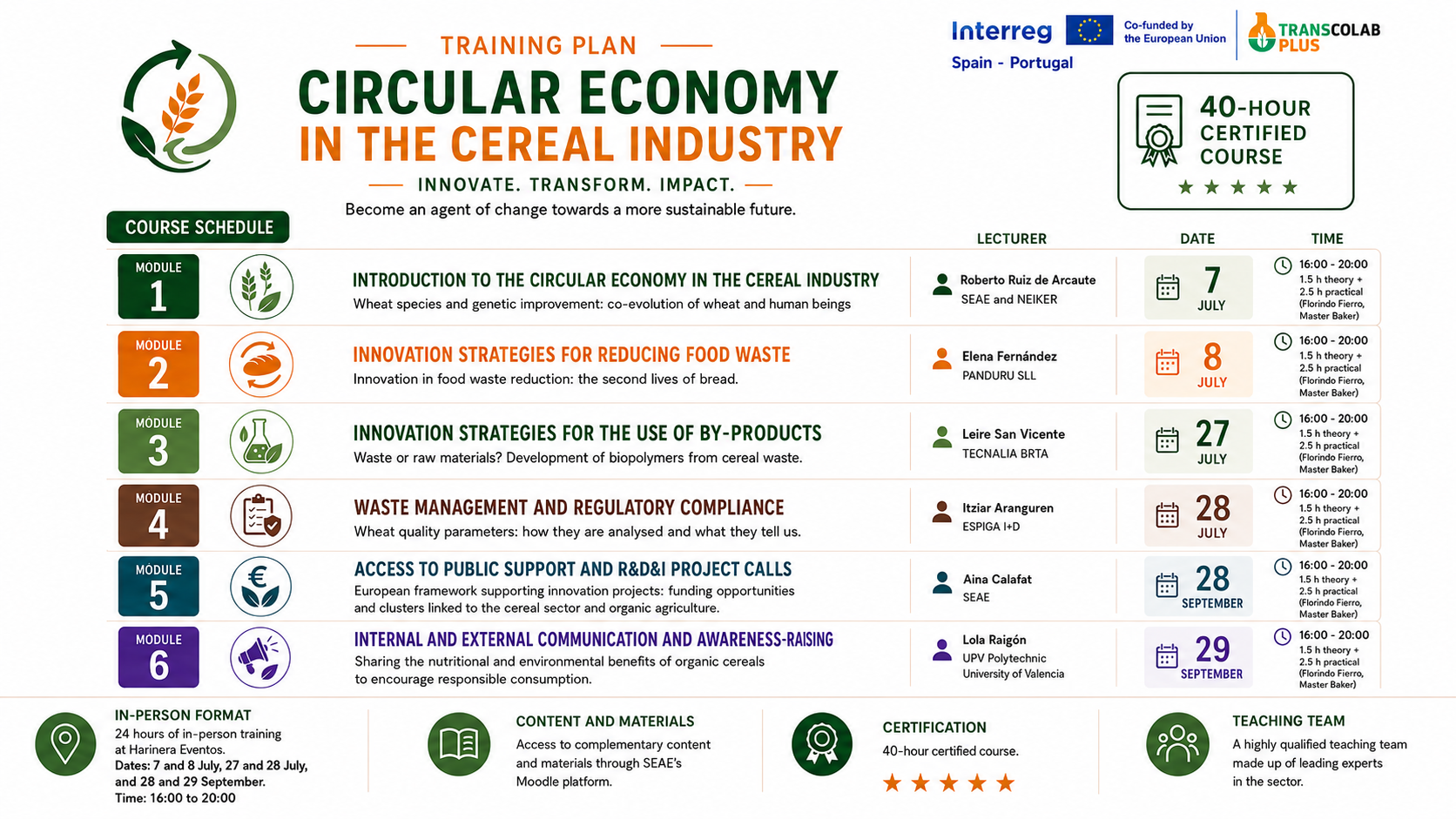
- Module 1. Introduction to Circular Economy in the Cereal Industry
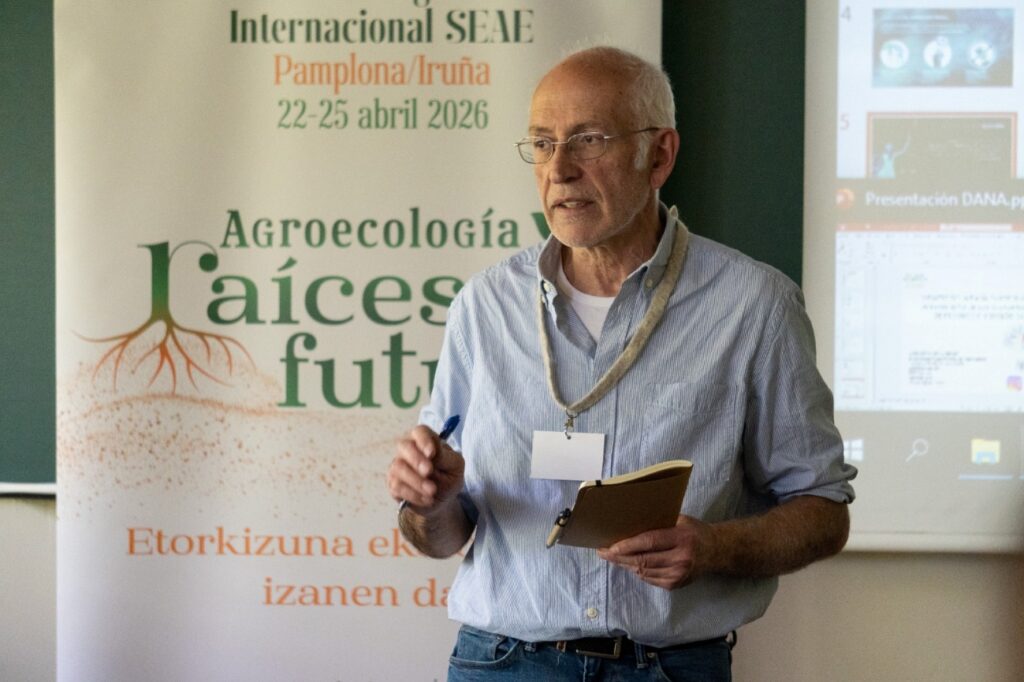
Roberto Ruiz de Arcaute (SEAE and NEIKER): Analysis of wheat species and genetic improvement processes, exploring the co-evolution between humans and cereals as the basis for more sustainable cereal production adapted to current challenges.
- Module 2. Innovation Strategies for Reducing Food Waste
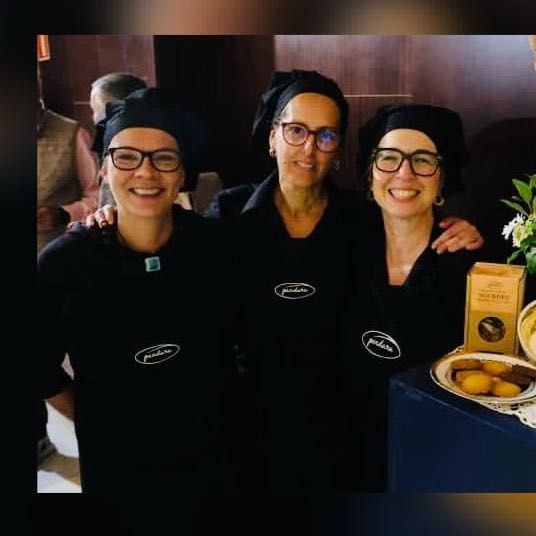
Elena Fernández (PANDURU SLL): Innovative experiences to reduce food waste and generate new business opportunities through the valorisation of food products, with special attention to the second lives of bread.
- Module 3. Innovation Strategies for the Use of By-products
Thomas Dietrich (TECNALIA BRTA): New applications and technological developments that make it possible to transform cereal waste into high value-added raw materials, including the production of biopolymers.
- Module 4. Waste Management and Regulatory Compliance
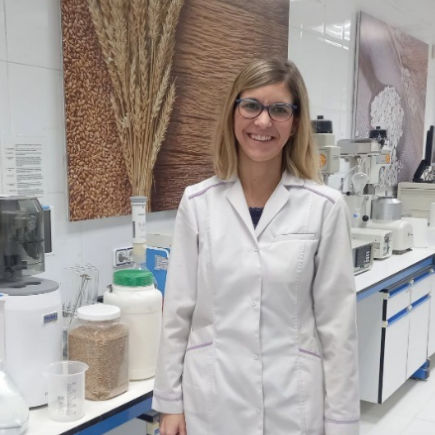
Itziar Aranguren (ESPIGA I+D): Knowledge of wheat quality parameters, analysis systems and the technical and regulatory requirements needed for efficient and sustainable management.
- Module 5. Access to Official Grants and Calls for R&D&I Projects
Aina Calafat (SEAE): Presentation of the main European funding opportunities for innovation projects, as well as programmes and clusters linked to the cereal sector and organic farming.
- Module 6. Internal and External Communication and Awareness Raising
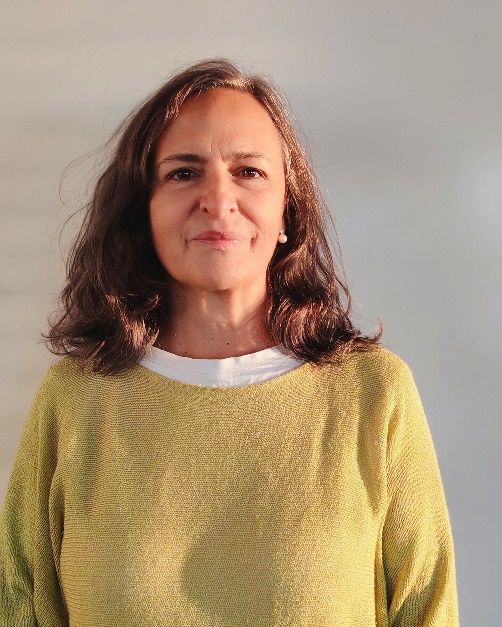
Lola Raigón (Polytechnic University of Valencia): Strategies to effectively communicate the nutritional, environmental and social benefits of organic cereals, promoting more responsible and conscious consumption.
Practical information
In-person format: Harinera Eventos, Carr. de Villalpando, km 2, 49023 Zamora. Carr. de Villalpando, km 2, 49023 Zamora .
Timetable: from 4:00 p.m. to 8:00 p.m.
Dates: 7 and 8 July, 27 and 28 July, and 28 and 29 September.
Certification: 40 accredited hours.
Supplementary materials: access to SEAE’s Moodle platform.
A unique opportunity for professionals, companies, entrepreneurs, technicians, students and anyone interested in learning about the latest trends in sustainability, innovation and circular economy applied to the cereal industry.
Flexible format: Participants may register for the full programme or attend only those modules that are most relevant to their professional activity.